
Understanding the Meniscus
The meniscus is a C-shaped piece of cartilage located between the femur (thighbone) and tibia (shinbone). Each knee contains two menisci: a medial meniscus on the inside of the knee and a lateral meniscus on the outside.
These important structures help:
- Cushion and absorb shock during movement
- Distribute body weight across the knee joint
- Improve knee stability
- Protect the joint cartilage from excessive wear
- Support smooth knee motion
Because the meniscus plays such a critical role in knee function, injuries to this cartilage can cause pain, instability, and limitations in daily activities.
What Is a Meniscal Tear?
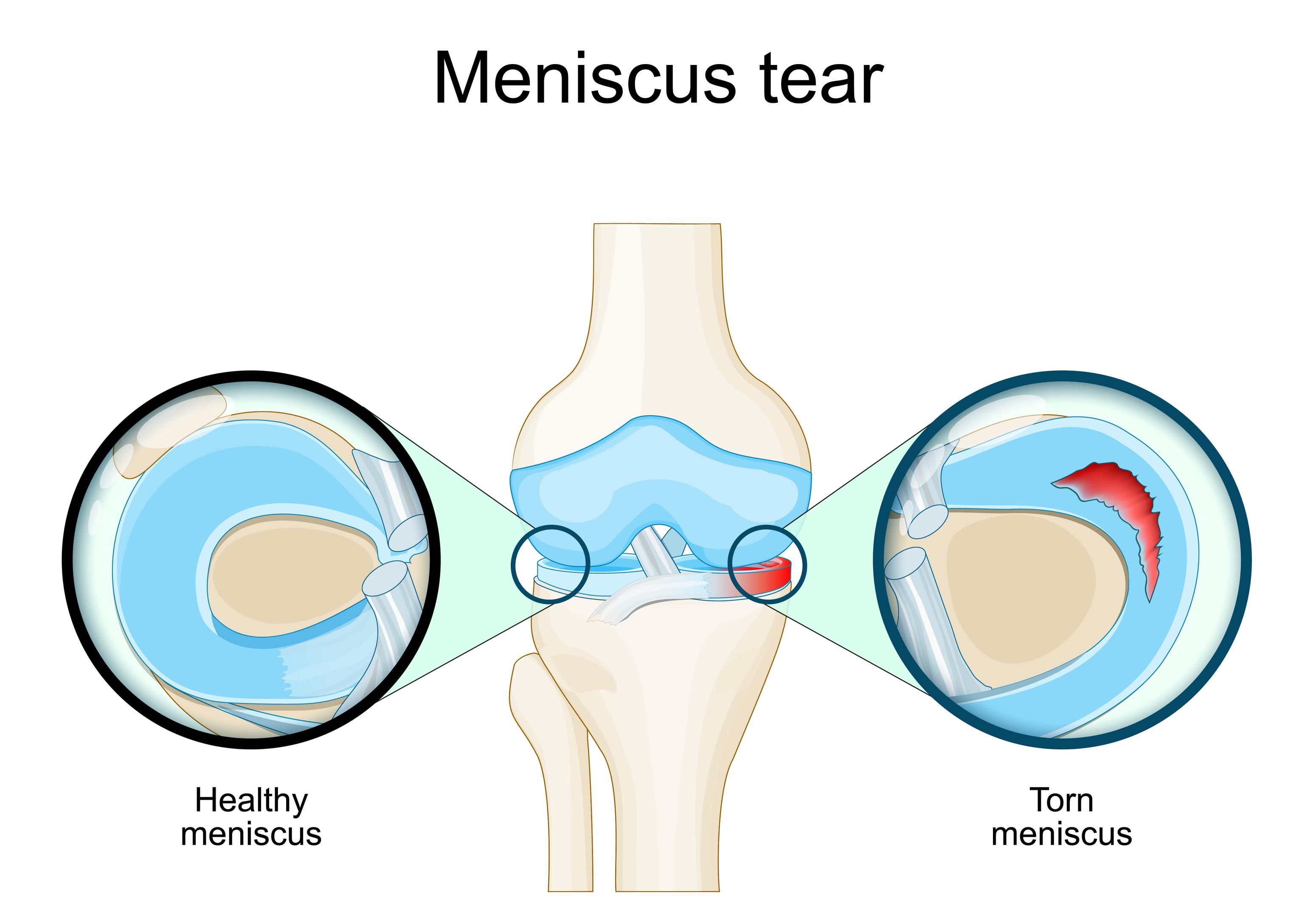
A meniscal tear is one of the most common knee injuries, particularly among athletes and active individuals. The injury often occurs when the knee twists suddenly while the foot remains planted on the ground.
Meniscal tears can be classified into two main categories:
Traumatic Meniscal Tears
These tears typically occur during sports or physical activities that involve sudden pivoting, cutting, squatting, or direct contact. They are frequently seen in younger and active patients.
Degenerative Meniscal Tears
As we age, the meniscus naturally becomes less flexible and more susceptible to wear. Degenerative tears can develop gradually from everyday activities and are more common in adults over 40.
Symptoms of a Torn Meniscus
The symptoms of a meniscal tear can vary depending on the severity and location of the injury. Common signs include:
- Knee pain along the joint line
- Swelling that develops within hours or days
- Stiffness and reduced mobility
- A catching or locking sensation in the knee
- Difficulty bending or straightening the leg
- Knee instability or a feeling that the knee may give way
- Pain during twisting, squatting, or walking
If these symptoms persist or interfere with your daily activities, an orthopedic evaluation is recommended.
Diagnosing a Meniscal Tear
At Academy Orthopedics, our physicians perform a comprehensive evaluation to determine the source of your knee pain and identify the most appropriate treatment option.
Your evaluation may include:
- A detailed review of your symptoms and medical history
- A physical examination of the knee
- Assessment of knee stability, range of motion, and joint tenderness
- Diagnostic imaging, such as X-rays or MRI scans, when necessary
Accurate diagnosis is essential because meniscal tears can occur alongside other knee injuries, including ligament damage or cartilage wear.
Non-Surgical Treatment for Meniscal Tears
Not every meniscal tear requires surgery. Many patients experience significant improvement through conservative treatment options.
Depending on your condition, treatment may include:
- Activity modification
- Rest and ice therapy
- Anti-inflammatory medications
- Knee bracing
- Corticosteroid or other joint injections
- Structured rehabilitation exercises
Factors such as the tear’s size, location, severity, your age, activity level, and overall knee health help determine whether non-surgical treatment is appropriate.
If symptoms continue despite conservative care, surgery may be recommended.
Meniscal Surgery
Meniscal surgery is a common orthopedic procedure for knee cartilage injuries. The surgery is often performed to relieve pain, restore knee function, and help patients return to the activities they enjoy. Most procedures are performed using minimally invasive arthroscopic techniques.
What Is Knee Arthroscopy?
Knee arthroscopy is a minimally invasive surgical procedure that allows your surgeon to examine and treat structures inside the knee through small incisions.
During the procedure:
- A small camera called an arthroscope is inserted into the knee joint
- Images are displayed on a high-definition monitor
- Specialized surgical instruments are used through additional small incisions
- Damaged tissue can be repaired or removed with minimal disruption to surrounding structures
Arthroscopic surgery typically results in less postoperative discomfort, smaller incisions, and faster recovery compared to traditional open procedures.
Types of Meniscal Surgery
Depending on the nature of your injury, your surgeon may recommend one of the following procedures.
Meniscectomy
A meniscectomy involves removing the damaged portion of the meniscus while preserving as much healthy cartilage as possible.
This procedure may be recommended when:
- The tear cannot be repaired
- The damaged tissue is causing mechanical symptoms
- The torn portion has a limited blood supply and healing potential
Partial meniscectomy is the most common approach and aims to maintain maximum meniscal function.
Meniscus Repair
Whenever possible, preserving the natural meniscus is preferred.
During a meniscus repair, the torn cartilage is secured using specialized sutures or fixation devices to allow healing. Meniscus repair may be recommended for:
- Younger or active patients
- Tears located in areas with good blood supply
- Certain tear patterns that have strong healing potential
Although recovery is generally longer than a meniscectomy, successful repair helps preserve knee function and may reduce the risk of future arthritis.
Meniscus Replacement or Transplantation
For select patients who have previously undergone significant meniscus removal and continue to experience knee pain, meniscus transplantation may be considered.
This procedure involves replacing the damaged meniscus with donor tissue or specialized biologic graft material. Meniscus transplantation is typically reserved for carefully selected patients who meet specific criteria.
Recovery After Meniscal Surgery
Recovery time varies depending on the type of procedure performed.
In general:
- Patients undergoing partial meniscectomy often return to normal activities more quickly.
- Meniscus repair typically requires a longer healing period to protect the repaired tissue.
- Rehabilitation exercises are an important part of recovery and help restore strength, flexibility, and knee function.
Your surgeon will provide individualized recovery guidelines based on your procedure and activity goals.
Why Choose Academy Orthopedics for Meniscal Treatment?
At Academy Orthopedics, we understand how knee pain can interfere with work, sports, and everyday life. Our board-certified, fellowship-trained orthopedic specialists take a patient-first approach, creating personalized treatment plans designed to help you regain mobility and return to the activities you enjoy.
From advanced diagnostic evaluations to minimally invasive arthroscopic surgery, our team is committed to providing exceptional orthopedic care for patients throughout Cumming, Buford, Duluth, and the surrounding North Georgia communities.
Schedule an Evaluation for Knee Pain at Academy Orthopedics
If knee pain, swelling, or locking is limiting your ability to stay active, the team at Academy Orthopedics is here to help. We will carefully evaluate your condition, discuss your treatment options, and develop a personalized plan focused on achieving the best possible outcome.
Call 770-271-9857 or book an appointment through our website today and learn more about your options for meniscal tear treatment and meniscal surgery.
Frequently Asked Questions
How do I know if I need meniscal surgery or if my tear can heal on its own?
Not all meniscal tears require surgery. Small, stable tears or degenerative tears may improve with rest, activity modification, and rehabilitation. Surgery is typically considered when pain, locking, or instability persists despite conservative treatment, or when imaging shows a tear unlikely to heal on its own.
What happens if a meniscus tear is left untreated?
Untreated tears can sometimes lead to ongoing pain, swelling, and mechanical symptoms such as catching or locking. In certain cases, especially larger or unstable tears, delaying treatment may contribute to further joint irritation and cartilage wear over time.
Is meniscus repair surgery always performed using arthroscopy?
In most cases, yes. Arthroscopic techniques are the standard because they allow surgeons to treat the injury through small incisions with less disruption to surrounding tissue. Open surgery is rarely required and typically reserved for complex or unusual cases.
How long does a meniscal surgery procedure take?
Most arthroscopic meniscal procedures take approximately 30 to 90 minutes, depending on the type of repair and whether additional knee issues are addressed during the same operation.
Will I be awake during meniscus surgery?
Meniscal surgery is usually performed under general anesthesia or regional anesthesia. Your surgical team will determine the safest and most comfortable option based on your medical history and the planned procedure.
What are the risks or complications of meniscal surgery?
While complications are uncommon, potential risks may include infection, stiffness, blood clots, nerve irritation, or incomplete symptom relief. Your surgeon will review individualized risks before surgery and take precautions to minimize complications.
How painful is recovery after meniscal surgery?
Discomfort is expected in the early recovery phase, but pain is typically manageable with prescribed medications, ice, elevation, and rest. Patients who undergo meniscus repair may experience a longer initial recovery period compared to partial meniscectomy.
When can I return to work after meniscal surgery?
Return to work depends on the type of surgery and job demands. Patients with sedentary roles may return within a few days to a couple of weeks after meniscectomy, while meniscus repair patients or those with physically demanding jobs may require a longer recovery period.
When can I return to sports or exercise?
Return to sports varies widely. Light activity may resume earlier after meniscectomy, while meniscus repair typically requires a gradual return over several months. Clearance is based on healing progress, strength, and stability.