
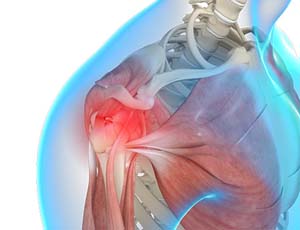
Shoulder trauma refers to injury affecting the bones, muscles, tendons, or ligaments of the shoulder joint, often resulting in pain, stiffness, and limited movement. It commonly develops from repetitive overhead motion in sports like swimming, tennis, and weightlifting, or from a sudden fall, twist, or direct blow to the joint. At Academy Orthopedics, our board-certified physicians in Cumming, Buford, and Duluth, GA, evaluate shoulder trauma to identify the underlying cause and build a treatment plan that gets you back to the activities you enjoy.
What Causes Shoulder Trauma?
Shoulder trauma generally falls into two categories: overuse injuries and acute injuries.
Overuse injuries build up gradually from repetitive arm motion. Athletes in swimming, tennis, pitching, and weightlifting are especially prone to this type of shoulder trauma because these sports place repeated stress on the same muscles and tendons. Over time, this repetitive strain can lead to inflammation, tissue breakdown, or reduced range of motion.
Acute traumatic shoulder injuries happen suddenly, typically from a fall, a direct blow to the joint, or a forceful twist of the arm. These injuries are common in contact sports but can also occur during everyday activities, such as slipping on a wet surface or reaching awkwardly to catch something.
What Are the Common Symptoms of Shoulder Trauma?
Shoulder trauma can present differently depending on the underlying injury, but common symptoms include:
- Pain that may be sharp, dull, or achy
- Stiffness or reduced range of motion
- Difficulty with routine activities like reaching overhead, dressing, or sleeping on the affected side
- A popping, clicking, or catching sensation during movement
- Swelling or visible deformity, in more severe cases
If any of these symptoms last more than a few days, worsen with activity, or interfere with daily tasks, it is a good sign that an orthopedic evaluation is needed.
What Are the Common Injuries That Cause Shoulder Trauma
Sprains and Strains
A sprain is the stretching or tearing of a ligament, the tissue that connects adjacent bones within a joint. Sprains often occur from a fall or a sudden twisting motion of the arm.
A strain is the stretching or tearing of a muscle or tendon, the tissue that connects muscle to bone. Strains are common among athletes and are usually caused by twisting or pulling motions placed on the tendon.
Shoulder Dislocation
A shoulder dislocation occurs when the ball of the shoulder joint is forced out of its socket. This injury is frequently caused by a fall or a direct blow to the shoulder, particularly during contact sports. A dislocated shoulder requires prompt medical attention to reposition the joint safely and check for further damage.
Tendinitis
Tendinitis is inflammation of a tendon, the tissue connecting muscle to bone. In the shoulder, it typically develops from injury or from repetitive overuse, such as repeated overhead motion in throwing or swimming.
Bursitis
Bursitis is inflammation of the bursa, a small fluid-filled sac that cushions and protects the joint. Shoulder bursitis can result from chronic overuse, a direct injury, arthritis, gout, or infection.
Rotator Cuff Injury
The rotator cuff is made up of the tendons and muscles that hold the bones of the shoulder joint together and allow the arm to move up and down. Rotator cuff injuries, whether from overuse or a sudden tear, often cause noticeable weakness and a decreased range of motion and are one of the most common reasons patients seek shoulder trauma treatment.
Shoulder Fracture
A fracture is a break in one of the bones of the shoulder, most commonly the clavicle (collarbone) or the upper arm bone near the joint. Shoulder fractures are typically caused by a fall or a direct blow to the shoulder.
Shoulder Arthritis
Osteoarthritis is the most common type of arthritis affecting the shoulder. It develops as the cartilage cushioning the joint gradually wears away, leading to pain and stiffness that tend to worsen over time.
What Are the Treatment Options for Shoulder Trauma?
Early evaluation and treatment help prevent minor shoulder injuries from becoming more serious problems. Initial treatment for most shoulder trauma follows the RICE method: rest, ice, compression, and elevation. This approach helps reduce swelling and pain in the first days after an injury.
Depending on the diagnosis, your Academy Orthopedics physician may also recommend:
- Anti-inflammatory medication to help manage pain and swelling
- A structured exercise program to strengthen the surrounding shoulder muscles and restore range of motion
- Bracing or immobilization for certain injuries, such as anterior shoulder dislocations or fractures
- Referral for physical therapy to support long-term recovery
- Imaging, such as X-ray or MRI, when a fracture, tear, or structural problem is suspected
- Surgical evaluation for injuries that do not improve with conservative care
Because shoulder trauma covers a wide range of conditions, from a mild strain to a rotator cuff tear, the right treatment plan depends on an accurate diagnosis. Our physicians take the time to identify exactly what is causing your symptoms before recommending next steps.
When to See an Orthopedic Doctor for Shoulder Trauma
Consider scheduling a visit with Academy Orthopedics if you experience:
- Shoulder pain that does not improve after a few days of rest and home care
- Visible deformity, significant swelling, or inability to move the arm
- Numbness, tingling, or weakness in the arm or hand
- A shoulder that feels unstable or as though it may “give out”
- Pain that interferes with sleep, work, or daily activities
Schedule a Shoulder Evaluation in Cumming, Buford, or Duluth, GA
Whether your shoulder trauma is the result of a sports injury, a fall, or gradual overuse, the physicians at Academy Orthopedics are here to help you find relief and get back to what you love doing. Call 770-271-9857 to schedule an appointment at one of our Cumming, Buford, or Duluth locations.
Frequently Asked Questions
What is the most common cause of shoulder trauma?
Shoulder trauma is often caused by repetitive overhead motion in sports such as swimming, tennis, pitching, and weightlifting, as well as sudden injuries like falls, direct blows, or forceful twisting of the arm.
How do I know if my shoulder injury is serious?
Signs that a shoulder injury may be serious include visible deformity, significant swelling, inability to move the arm, numbness or weakness, or a feeling that the joint is unstable. Any of these symptoms warrants a prompt orthopedic evaluation.
Is rest enough to heal a shoulder injury?
Rest, ice, compression, and elevation are appropriate first steps for most shoulder injuries. However, some conditions, such as rotator cuff tears, dislocations, or fractures, require additional treatment beyond rest to heal properly and avoid long-term complications.
Can shoulder trauma lead to arthritis later on?
Repeated injury or chronic overuse of the shoulder joint can contribute to cartilage wear over time, which may increase the likelihood of developing osteoarthritis in the shoulder later in life.
When should I see an orthopedic doctor instead of waiting it out?
If shoulder pain persists beyond a few days, worsens with activity, or is accompanied by weakness, instability, or a visible change in the shoulder’s shape, it is best to schedule an orthopedic evaluation rather than waiting for symptoms to resolve on their own.